 Sport Stats
Why serving errors hurt so much
The serve is the one skill your team performs alone, with no opponent in the way. When it goes into the net or out, the opponent scores without doing anything, and they also get the next serve.
Serving is still a balance. A safe serve that just drops over the net gives the opponent an easy pass and a perfect attack. A tough serve wins aces and breaks the opponent's passing, but it misses more often. The goal isn't zero errors. It's making sure your errors don't cost more than your tough serves win.
How to measure it: aces against errors
Most serves don't end the rally: the opponent passes and play goes on. The serves that do end the rally tell you the most about risk:
At the end of the match, count both and look at the share of errors. If errors far outnumber aces, your team is taking risks that aren't paying off.
When serving should be your training priority
Sport Stats uses a simple rule after each indoor match. Serving becomes the training idea when:
- at least 6 serves ended a rally (aces plus errors), so the numbers mean something, and
- 60% or more of them were errors, meaning your team missed at least three serves for every two aces.
These thresholds are a starting point, not a law. A team that serves very aggressively may accept more errors on purpose. What matters is whether the errors are a choice or an accident: if players miss even when they're trying to serve safely, it's time to practise.
A drill for your next practice
Serving drillBy The Art of Coaching Volleyball · watch on YouTubeThis is the drill Sport Stats recommends when serving is your team's weakest area. It comes from The Art of Coaching Volleyball, a well-known volleyball coaching channel. All credit for the drill goes to them.
Make the drill count
- Serve under pressure. Serving alone in an empty gym is easy. Add a score, a consequence or a teammate waiting to pass, so practice feels like a tight set.
- Note where the misses go. Serves into the net and serves out long usually have different causes. Knowing which one your team does more tells you what to fix.
- Agree on when to take risks. Many teams serve tougher when they're ahead and safer after a missed serve. A shared plan turns errors from accidents into choices.
- Check the next match. Compare aces and errors with the match before. That's how you know the practice time paid off.
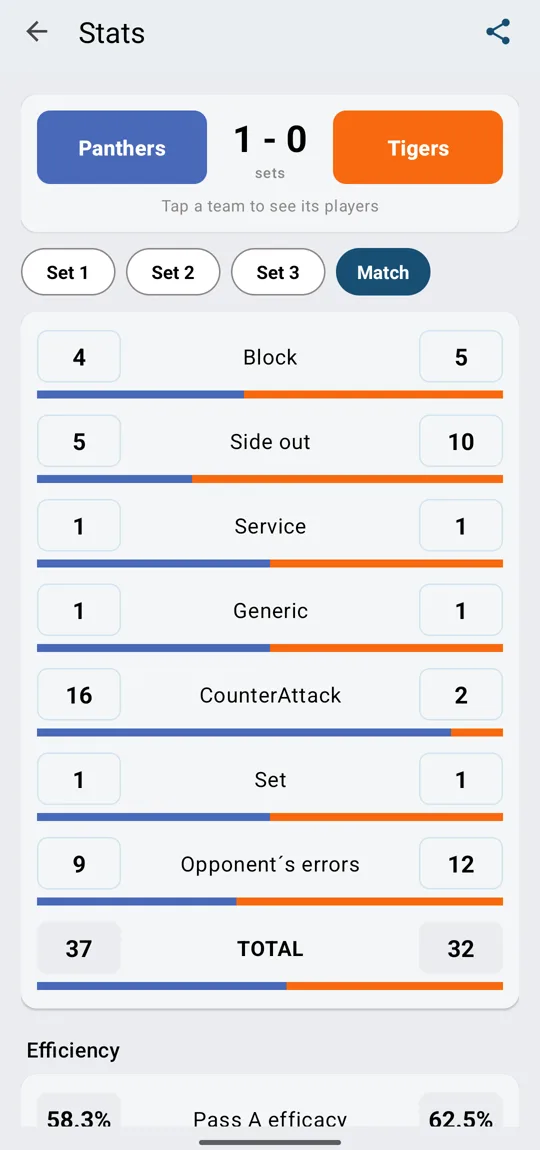
Count aces and errors without a clipboard
In Sport Stats you tap the server, then tap a service point or a service error. The app compares both teams set by set, lets you tap the Service number to see which players are behind it, and after the match suggests a drill for your weakest area.
Free on Google PlayMore drills: Serve receive drills